The ISOFIX system is a quick and easy way to secure the child safety seat in the car, but how does it work and actually make your children safer?
ISOFIX is the most practical and potentially safest way to install the child safety seat in the car. The idea is that instead of dealing with seat belts and straps, you simply snap the seat into place, effectively anchoring it to the car's structure. This guide will tell you how it works and how much safer it is for you and your child.
What is ISOFIX?
ISOFIX is simply a series of metal hooks that are attached to the back of the child safety seat. These hooks are designed to a common global standard to match the anchor points built into car seats.

How does ISOFIX work?
Look at the back of an ISOFIX seat. There you will see two long metal arms, with automatic closures at the end. These are usually brighter in color than the rest of the chair. These are the anchor points of the child seat.
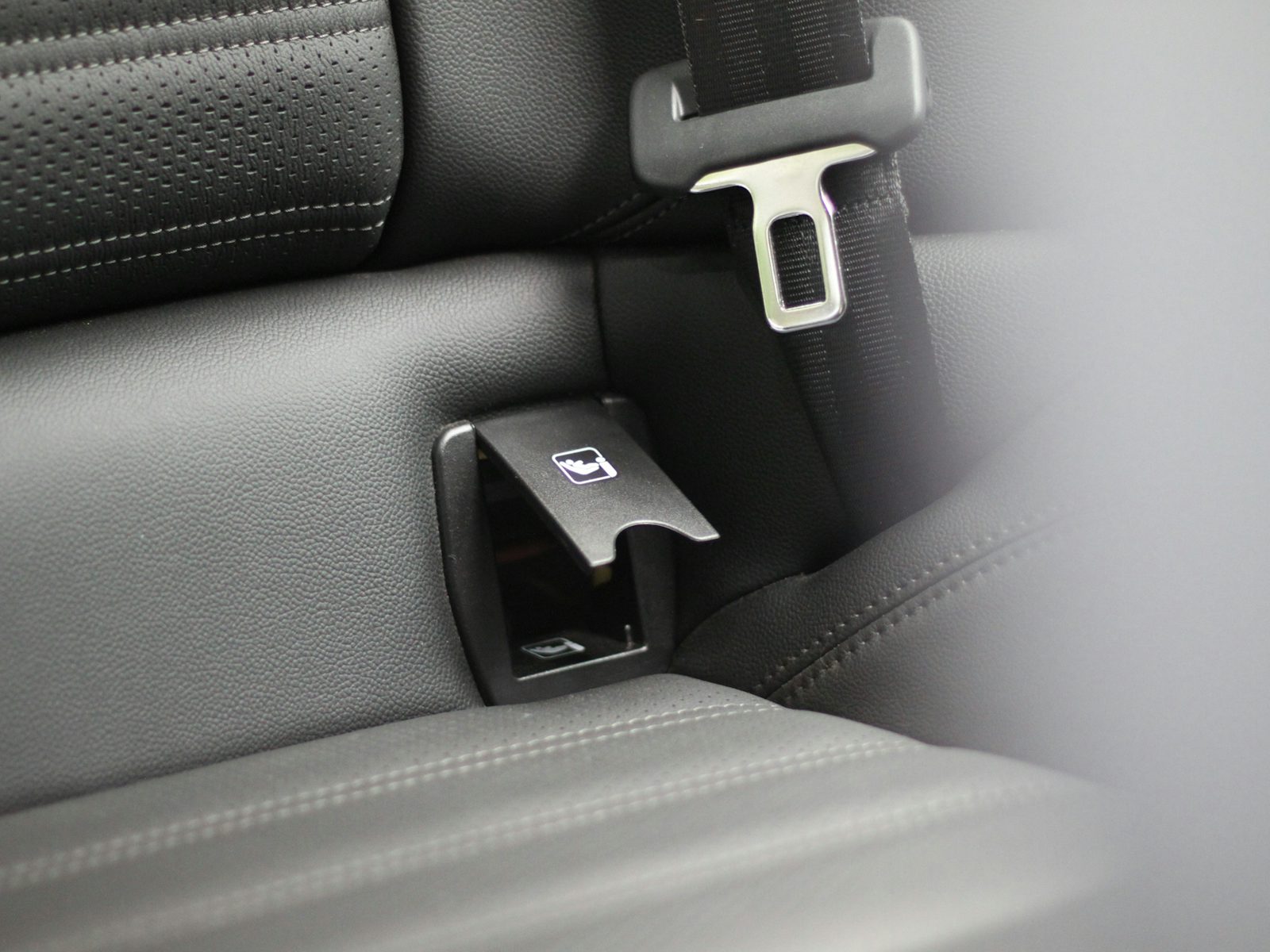
Now, look at the seats in your car. ISOFIX points are usually found on the two outer rear seats of your car and, depending on the make and model, sometimes also on the front passenger seat. Look for a symbol that represents a child in a car seat, and there you will find the ISOFIX anchor points. Sometimes those anchor points will be just below the back edge of the seat cushion, under the backrest. On other models, they will be behind protective plastic covers, which must be removed or lifted. On some cars, the ISOFIX anchor points will be behind small zippered fabric panels that need to be opened.
To place the child seat on the ISOFIX anchor points, simply place the base of the seat on the car seat, with both arms facing the anchor points. Now, slide the chair back until the hooks hook onto the anchor points, which should happen automatically. It may take a couple of tries and a steady movement of the chair to activate the arm hook. Pull the chair forward to check that the latch is secure.
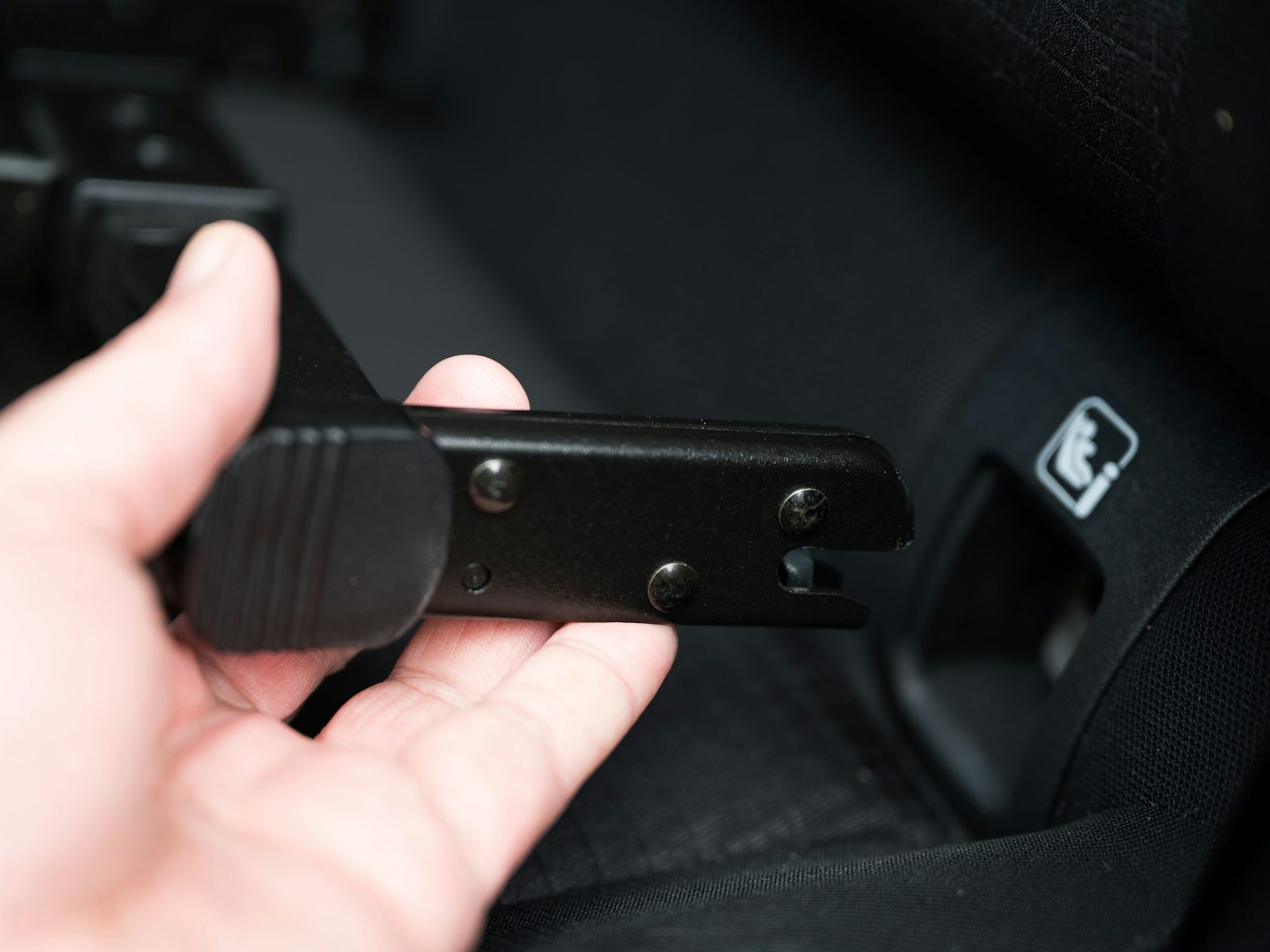
Para liberar la silla del coche, generalmente habrá un pequeño botón de liberación en los brazos, que solo necesitarás apretar para abrir los ganchos.
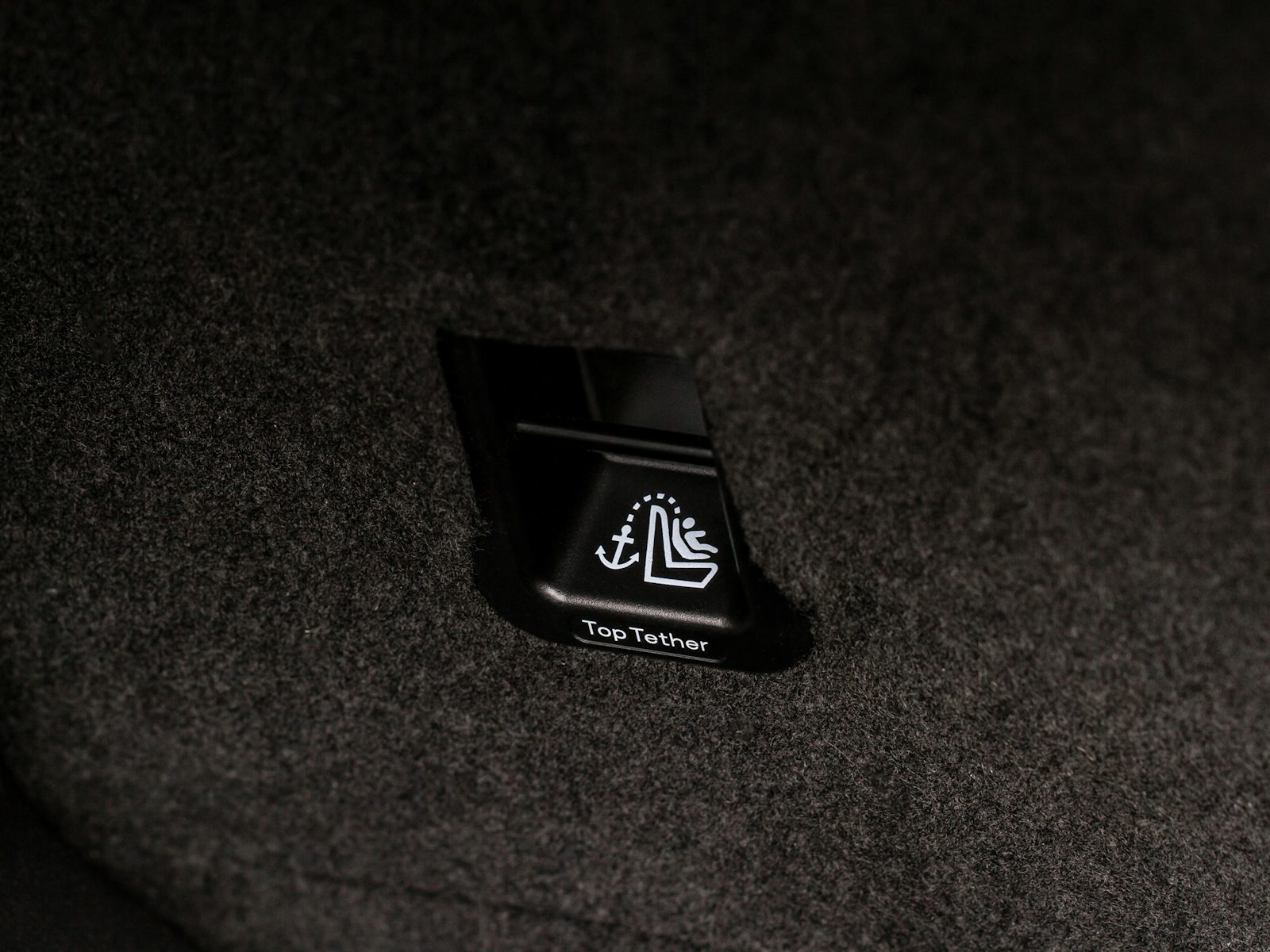
También existe un tercer punto de contacto para una silla ISOFIX, generalmente llamado el top tether o anclaje superior. Este puede ser una pata de apoyo ajustable que proviene del borde delantero de la silla del niño y debe estar firmemente en contacto con el suelo del coche, o una tira de tela similar a un cinturón de seguridad, que debe engancharse en un punto de conexión en la parte posterior del asiento del coche, en el suelo del maletero o, a veces, en el techo del vehículo. Necesitarás consultar el manual de tu coche para saber cuál es el adecuado para ti. Estos top tether o patas de apoyo evitan el movimiento excesivo de la silla en caso de un choque, y ayudan a mantener a tus hijos más seguros. No todas las sillas ISOFIX tienen un top tether o una pata de apoyo, pero la mayoría lo tienen.
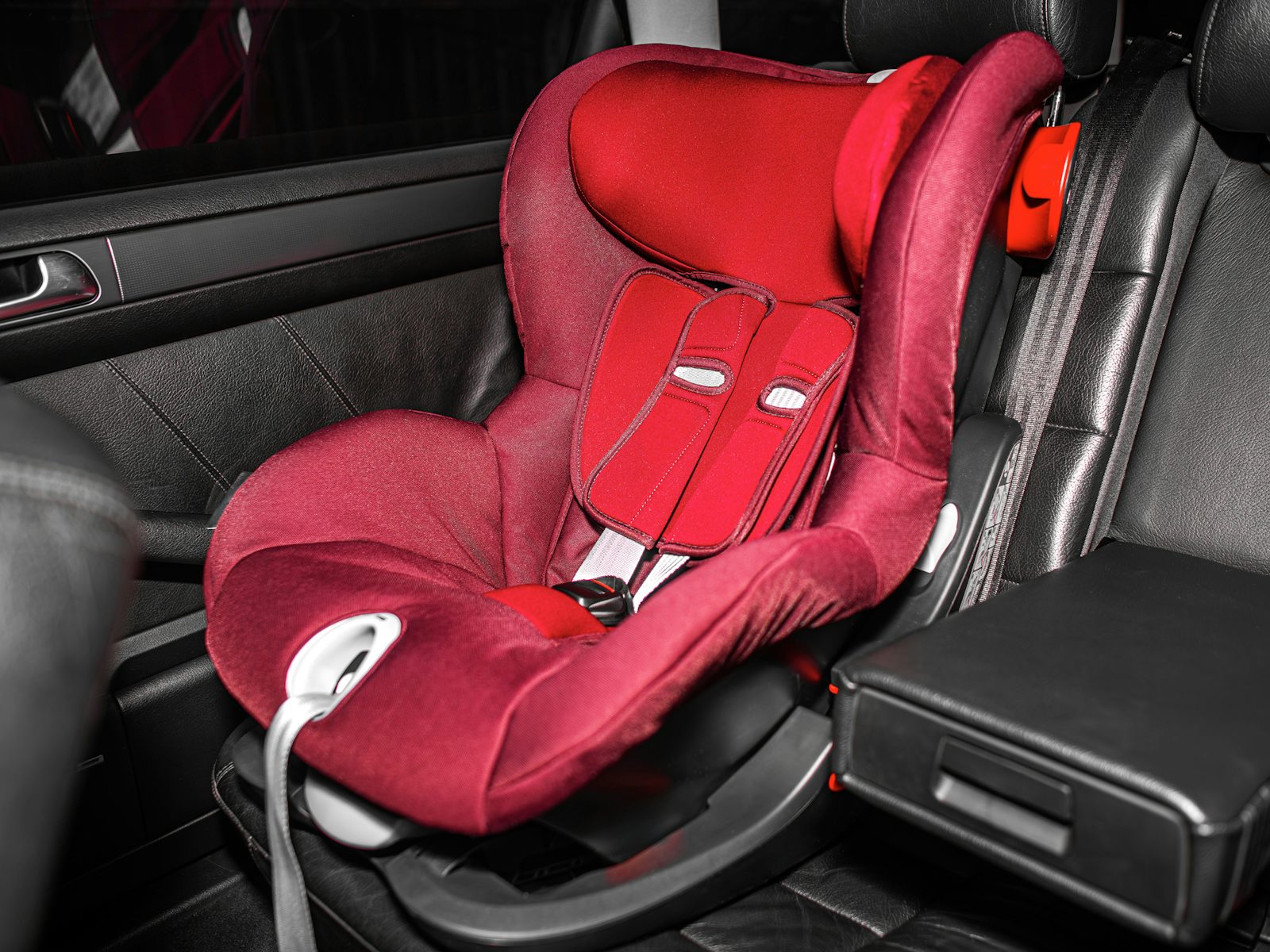
Una vez instalado, el propio arnés interno de la silla ISOFIX se convierte en el cinturón de seguridad de tu hijo, maximizando su seguridad hasta que tenga la edad suficiente para usar el cinturón de seguridad del coche con un cojín elevador. Hay coches en los que el ISOFIX es mas fácil de instalar, pero el sistema funciona en la gran mayoría.
¿Cuáles son los beneficios de ISOFIX?
Instalación precisa: El mayor beneficio de ISOFIX es que es simple y funciona de una sola manera, lo que significa que es menos probable que instales incorrectamente la silla de seguridad para niños, lo cual podría ser tan peligroso como no tener una silla en absoluto. ISOFIX elimina gran parte de la incertidumbre al colocar una silla de seguridad.
Fijado a la estructura del coche: Una silla ISOFIX, cuando está instalada correctamente, es esencialmente parte de la estructura del coche y está anclada de manera segura a uno de los puntos más fuertes del coche. Esto significa que una silla ISOFIX es mucho menos probable que se mueva durante un choque que una silla asegurada solo con los cinturones de seguridad del coche, lo que mejora aún más la seguridad de tus hijos.
Rápido y fácil: Aunque puede llevar un poco de tiempo acostumbrarse a cómo funciona ISOFIX, una vez que lo hayas dominado, colocar una silla para niños en tu coche toma solo unos segundos. Además, es mucho menos tiempo consumido y, a menudo, más fácil para tu espalda que colocar una silla que requiere pasar el cinturón de seguridad del coche a través de una serie de clips y cierres.

¿Es ISOFIX más seguro que un cinturón de seguridad?
Sí, ISOFIX es más seguro que el cinturón de seguridad por dos razones principales:
-
Instalación incorrecta: Siempre existe la posibilidad de que el cinturón de seguridad no esté correctamente colocado en los puntos de anclaje de la silla para niños. ISOFIX reduce considerablemente el riesgo de una instalación incorrecta de la silla, ya que los brazos que se enganchan en los ganchos de anclaje emiten un claro “clic” cuando se aseguran, y a menudo también aparecerá un indicador verde en la silla ISOFIX cuando esté bien colocada.
-
Sin holgura en el cinturón: No hay holgura en el cinturón de seguridad que asegure la silla al coche, lo que mejora aún más la seguridad al reducir el movimiento de la silla durante un choque.
Tipos de sillas ISOFIX
No todas las sillas ISOFIX son iguales, y existen tres tipos principales, que cumplen con las normativas de seguridad europeas R44-04 o R44-03. Puedes comprobar qué tipo es tu silla buscando una etiqueta de color naranja en el costado o debajo de la silla. Los tres tipos principales son:
-
Universal approval: This is an ISOFIX seat that has been approved for use in any car with ISOFIX points, and should fit perfectly in any car. However, it is always advisable to check before buying that the chosen seat works well with your car.
-
Semi-universal approval: As the name suggests, a semi-universal ISOFIX seat is designed to work with most cars, but may not be compatible with your specific car. Again, verifying that the seat you are thinking of buying is compatible with your car and its ISOFIX points is vital.
-
Vehicle-specific approval: As the name suggests, a vehicle-specific ISOFIX seat is designed to work with a specific car make or model and is usually part of that brand's official accessories catalogue. Do not buy one of these seats if you do not have the car for which it is designed.
Does my car have ISOFIX?
Almost certainly, yes: since 2014 it has been mandatory for all cars with four or more seats sold new to have ISOFIX points, and all new models launched on the market had to have ISOFIX since 2012. However, many car manufacturers began installing ISOFIX points long before these dates.
If you're looking at used cars, the ISOFIX points should be listed in the vehicle specs or you can look for the two anchor points in the car photos or the ISOFIX logo, which is a stylized image of a child in a car seat.
The ISOFIX system is called LATCH, Canfix, LUAS or UCSSS in markets outside Europe. One thing is for sure, the best family cars have this safety system for the little ones.

What is the difference between ISOFIX and ISOFIT?
To make it even more confusing, there is also a system called ISOFIT (emphasis ours). The anchor points on an ISOFIT seat are identical to those on an ISOFIX seat, but while an ISOFIX seat has its own five-point seat belt that secures the child in the seat, an ISOFIT seat is secured to the car using the same points, but the car's seat belt secures the child in the seat. ISOFIT chairs tend to be for older children, for example, a high-back booster seat is more likely to use the ISOFIT system.
How to attach and remove an ISOFIX seat
Although the process of attaching and removing an ISOFIX seat varies slightly from car to car and seat to chair, and both the car and seat instructions should be consulted, generally speaking, the steps for attaching an ISOFIX seat are as follows:
-
Locate the ISOFIX anchor points in the car; This may require removing a cover or reaching between the back and seat cushion.
-
Extend the ISOFIX arms of the child seat and prepare to put it in place.
-
Slide the arms of the chair towards the anchor points.
-
Push the chair until you hear a "click" indicating that the hooks are securely secured.
-
If it has a support leg or top tether, attach it to the car.
To remove the seat, simply press the release button on the hooks or top anchor and pull the seat out of the car.
Is the ISOFIX system really necessary?
Strictly speaking, it is not necessary: there are many child seats that are secured using the car's own seat belt, and these offer adequate safety. However, it is very easy to make a mistake when fitting a child seat using the car's seat belt. If the seat is not properly positioned or secured, it is simply not safe. The ISOFIX system eliminates this concern, as it works in only one way, ensuring that once the chair is installed, it is correctly secured and secure.